Low boiler pressure is one of the most common call-outs we attend across Northampton and Northamptonshire. It’s also one of the few boiler problems you can sometimes fix yourself in about five minutes.
This guide explains what normal boiler pressure looks like, why it drops, how to re-pressurise a sealed system boiler, and when the problem is more serious than a simple top-up.
What is normal boiler pressure?
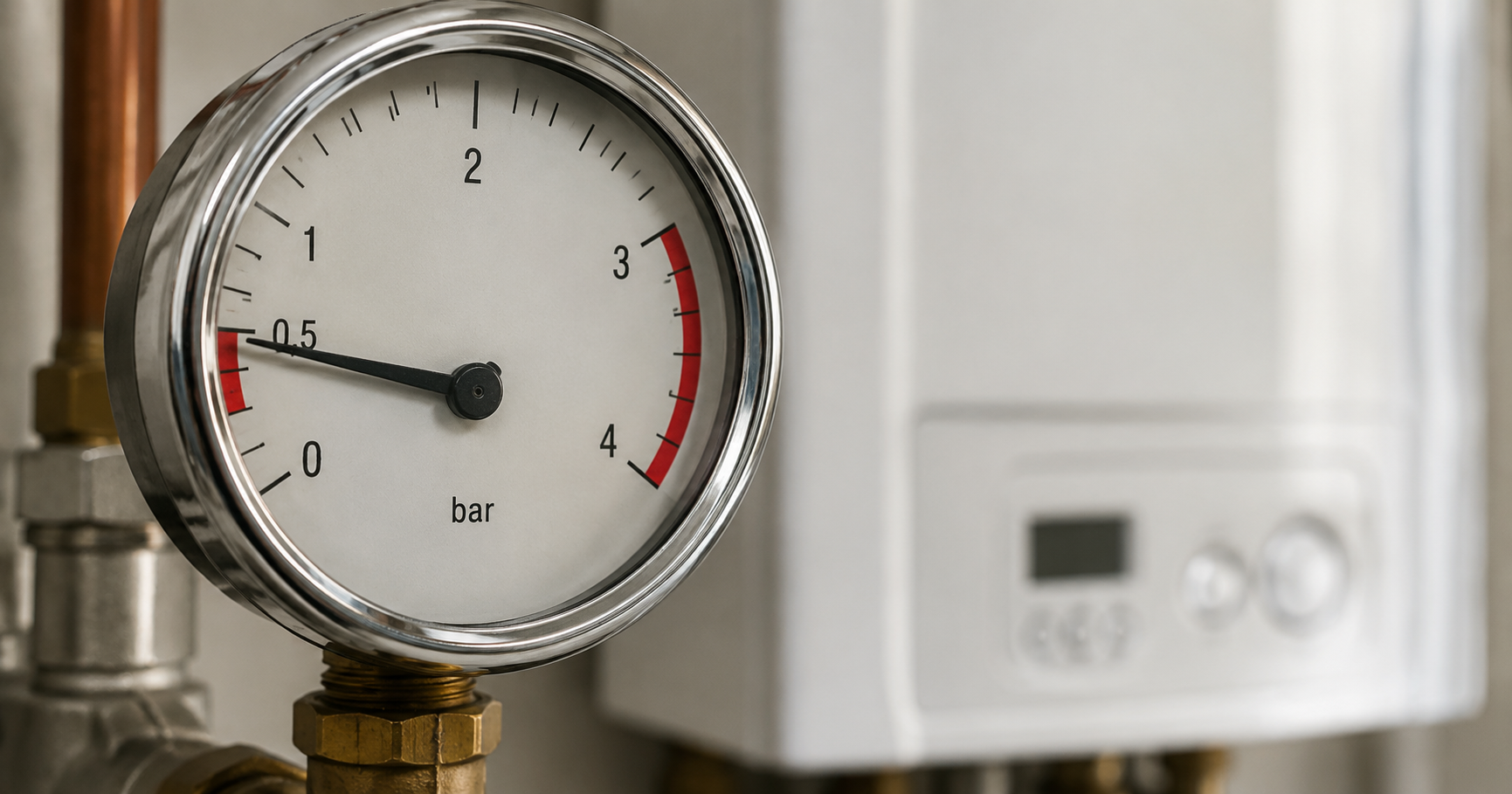
Most modern combi boilers and sealed-system boilers operate at between 1.0 and 1.5 bar of pressure when cold. When the system is hot and running, pressure typically rises to 1.5–2.0 bar — this is normal and expected.
Your pressure gauge is either a dial on the front of the boiler (with a needle) or a digital readout. Look for the pressure when the system is cold (i.e., the heating has been off for a few hours).
- Below 1.0 bar — low pressure. Many boilers will lock out and display a fault code (common codes: F1 on Worcester Bosch, EA on Baxi, 117 on Ideal).
- 1.0–1.5 bar — normal cold pressure.
- Above 2.5 bar — high pressure, which is a different problem (we’ll cover that briefly below).
Why does boiler pressure drop?
Sealed central heating systems are closed loops — they don’t consume water. Pressure should stay roughly stable year after year. When it drops, something is wrong. According to Gas Safe Register, boiler breakdowns peak between November and February, with low pressure among the top five causes of engineer call-outs across the UK each winter (Gas Safe Register, 2024).
The most common causes:
1. A small leak in the system. This could be at a radiator valve, a pipe joint, the boiler itself, or the pressure relief valve. Even a very slow drip — one that never forms a puddle — will deplete system pressure over days or weeks.
2. A faulty expansion vessel. Every sealed system has an expansion vessel — a small pressurised tank, usually mounted inside or near the boiler — that absorbs pressure fluctuations as the water heats and cools. If the vessel membrane fails, the system loses the ability to maintain pressure and a pressure drop or spike will follow.
3. A leaking pressure relief valve (PRV). The PRV is a safety valve that opens if pressure gets too high and vents water outside. If the PRV is faulty or its seat is corroded, it may weep water slowly even when pressure is normal.
4. Bleeding radiators. Every time you bleed a radiator, you release a small amount of pressurised water. If you’ve recently bled radiators, a pressure drop is expected and easy to fix.
How to re-pressurise a combi boiler (sealed system)
If you’ve identified no visible leaks and the drop is recent (or you’ve just bled radiators), you can re-pressurise the system yourself:
- Turn the boiler off and let it cool completely (at least 30 minutes after the last heating cycle).
- Locate the filling loop — this is a flexible braided hose with two valves, usually found under the boiler. On newer boilers it may be a built-in keyway valve inside the unit.
- Open both valves slowly (a flat-head screwdriver turns the slotted valves to the open position, aligning the slot with the pipe). You’ll hear water filling the system.
- Watch the pressure gauge. When it reaches 1.2–1.3 bar, close both valves.
- Turn the boiler back on. It should fire up and run normally.
If the pressure drops again within a day or two, there’s a leak somewhere. If it drops again within a few weeks, an intermittent leak or a faulty expansion vessel is likely. Either situation needs a Gas Safe engineer.
When NOT to top it up yourself
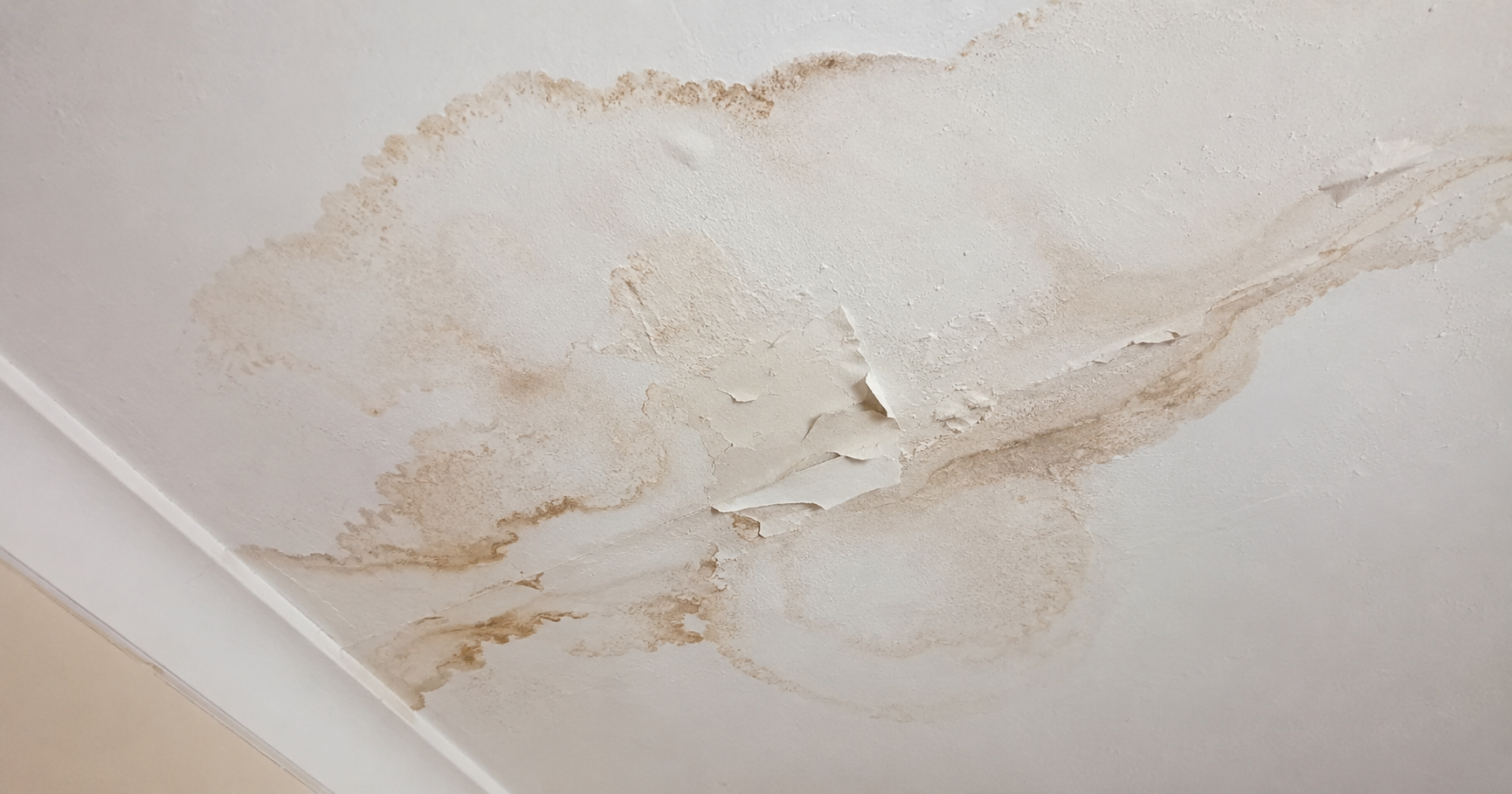
If you can see water dripping anywhere — from a radiator valve, pipe joint, or the boiler itself — do not re-pressurise without first isolating and fixing the leak. You’re just putting more water into a leaking system and increasing water damage.
If pressure rises above 2.5 bar when the heating runs — this is high pressure, often a sign of a faulty expansion vessel. Do not attempt to fix this yourself. Turn the boiler off and call an engineer.
If the boiler shows a fault code alongside low pressure — the fault code may indicate a secondary problem. Check the boiler manual for the code, but if in doubt, call us.
If this is the third or fourth time in a few months you’ve needed to top it up — there’s a persistent leak or a failing component somewhere. A one-off top-up is fine; topping up repeatedly without finding the cause is masking a growing problem.
What a Gas Safe engineer will do
The Energy Saving Trust estimates that a poorly maintained or inefficient boiler can operate at 15–25% below its rated efficiency, adding hundreds of pounds to annual heating bills (Energy Saving Trust, 2024). Annual servicing by a Gas Safe engineer keeps the system running at rated output and is a requirement of most boiler manufacturer warranties.
When we attend a boiler repair call in Northampton, we start by checking the obvious: visible drips, wet patches behind the boiler casing, and the PRV discharge pipe outside. If the issue extends to your wider heating system, our radiator and central heating service covers power-flushing and valve replacement too. We then pressure-test the system to identify any leaks under pressure.
For expansion vessel failures, the vessel is either re-pressurised (if the membrane is intact) or replaced. For leaking PRVs, we replace the valve. For system leaks, we locate the source — using leak detection dye if necessary — and repair.
Most low-pressure boiler calls are resolved in a single visit. We carry common parts for all major brands on the van.
If your boiler is showing low pressure and you’re in Northampton, Wellingborough, Kettering, or anywhere across our coverage area, request a quote online. We can talk you through the re-pressurisation process and, if it needs an engineer, we can usually attend the same day.
Gas Safe registered engineer covering Northampton and a 30-mile radius. Available 24/7 for emergency and scheduled plumbing work.
Updated: April 2025